Structural, not textual.
The model preserves formatting and intent while resolving symbols, imports, types, and relationships across modules and repositories.

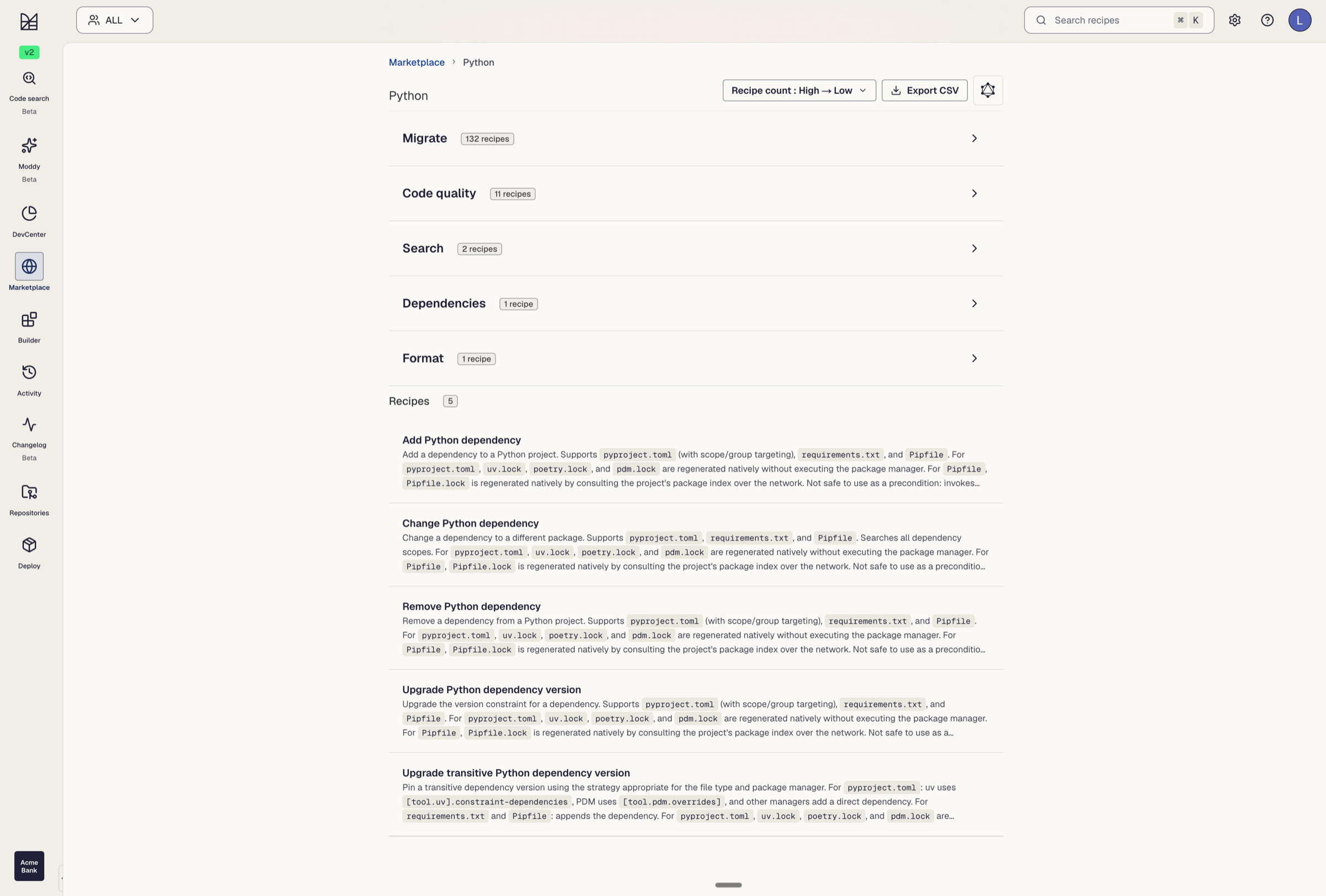
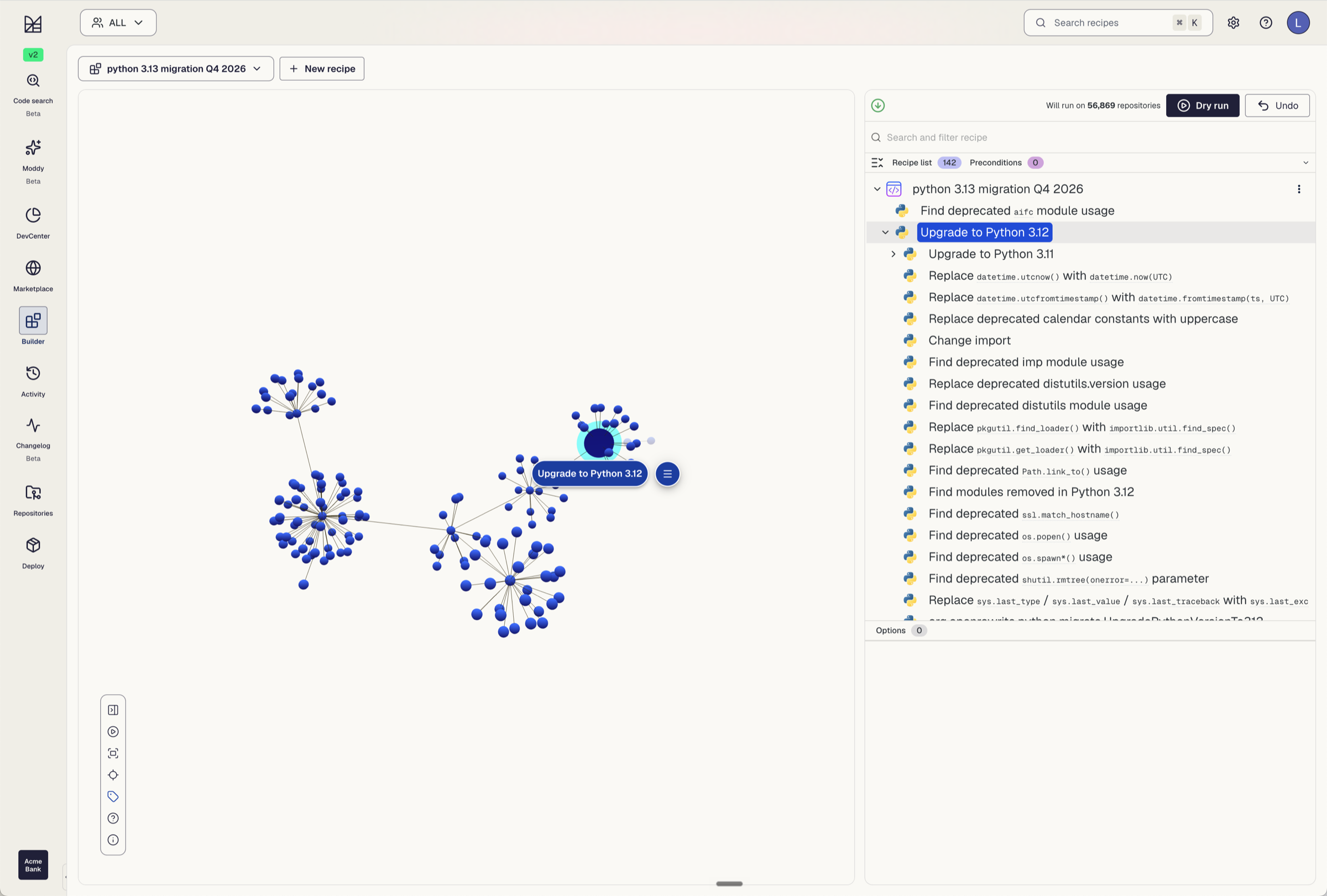
Upgrade Python runtimes, modernize deprecated APIs, manage pyproject.toml dependencies, and remediate CVEs. Built on a compiler-accurate model of your code, governed end-to-end.
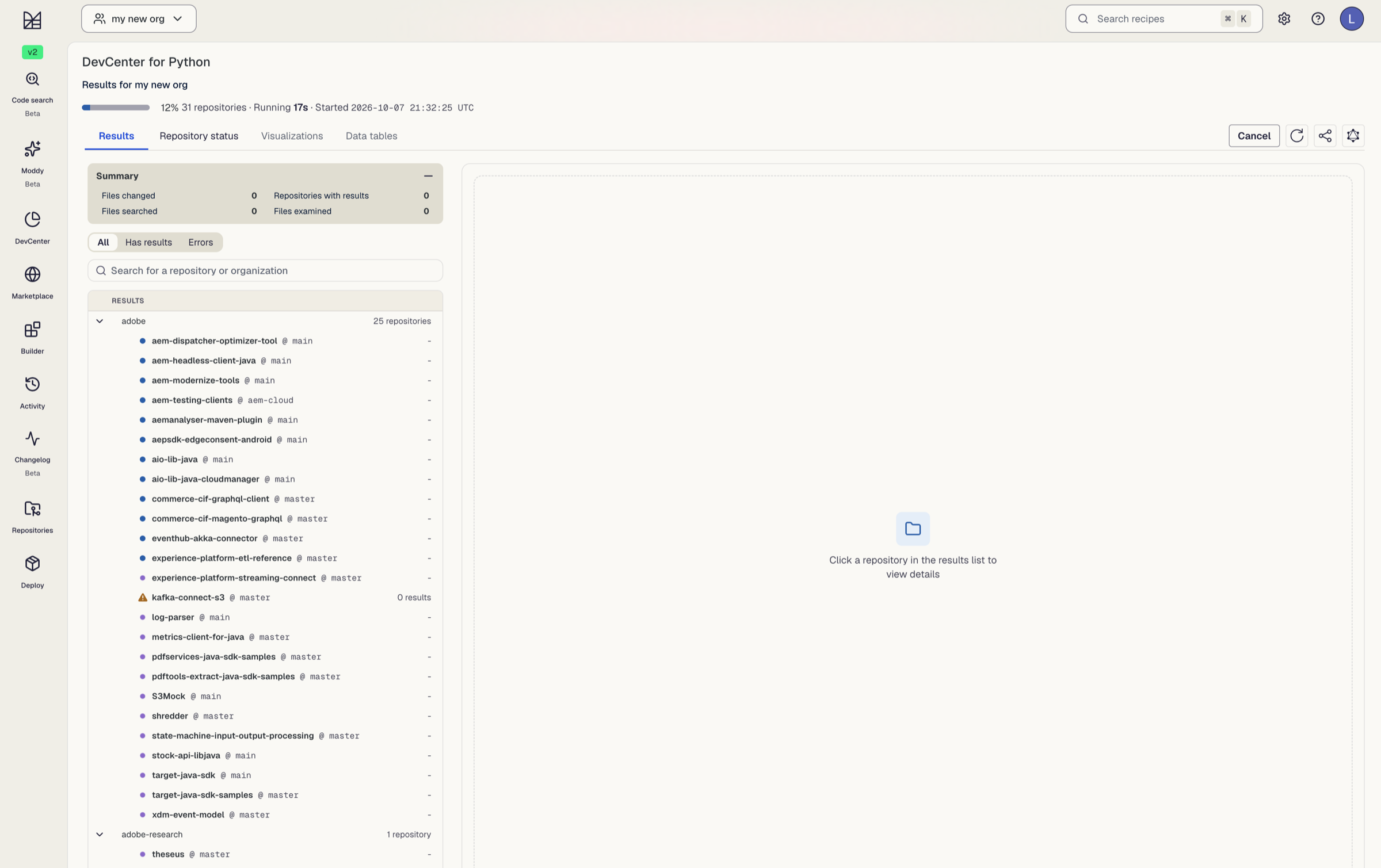
Code is modeled structurally and semantically rather than treated as text. Recipes execute against that model, applying consistent changes across many Python repositories.
The model preserves formatting and intent while resolving symbols, imports, types, and relationships across modules and repositories.
Python is shipped on the same engine as Java and C#. The categories below cover the recipes available now.
Python migration coverage is growing. More concrete version-to-version paths are landing this quarter.
Moderne helps keep our codebases cleaner, safer, and easier to evolve. It is a major unlock for teams that want to spend more time shipping and less time maintaining.
Python code modernization at enterprise scale refers to coordinating large-scale changes across many Python repositories, such as upgrading Python runtimes, updating deprecated APIs, aligning dependencies, and remediating security vulnerabilities.
Enterprises safely apply large-scale Python code changes by using semantic code analysis and deterministic automation rather than manual refactoring or AI-generated text edits.
Semantic code analysis for Python means analyzing Python code using a structural, type-attributed model rather than treating code as plain text.
AST-based Python refactoring tools operate on syntax trees but often lose higher-level semantic context, such as symbol resolution, dependency relationships, and behavioral intent.
Enterprises upgrade Python versions across many repositories by analyzing deprecated APIs, runtime compatibility, and dependency constraints using semantic automation.
Enterprises coordinate Python changes across multiple repositories by executing portfolio-wide change initiatives that analyze impact across repositories, apply consistent transformations, and deliver changes as reviewable pull requests.
Run Python changes on the same engine as Java.