Compiler-accurate by default.
Recipes run against a compiler-accurate model of your code, not a regex. Symbol resolution, type attribution, comments, and formatting are preserved on every run. Reviewers see the transformation, not whitespace churn.

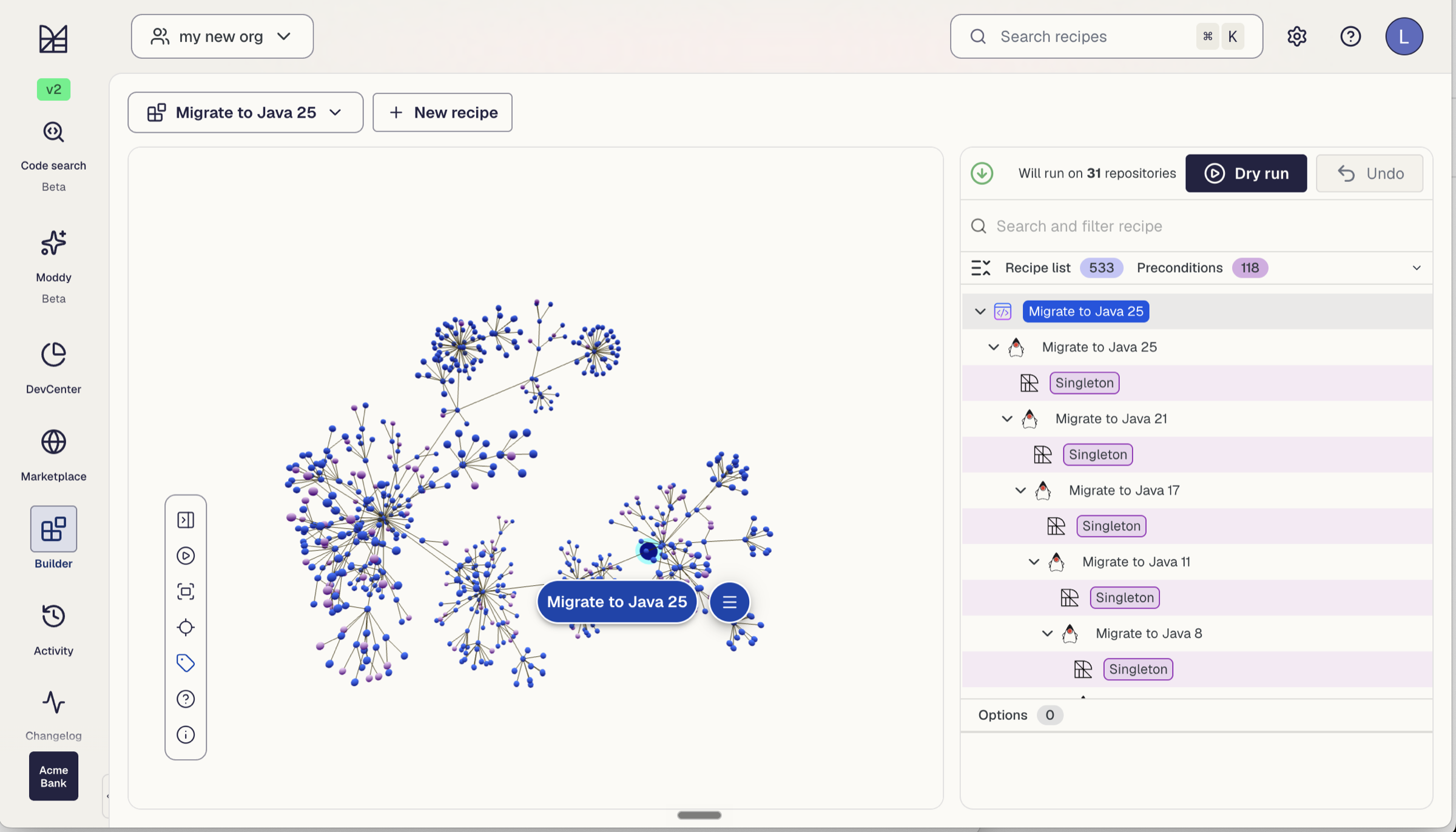
Java 8 through 25, plus framework migrations, dependency updates, and CVE remediation. One engine, one recipe catalog, one PR review process.
Java is the original target of OpenRewrite. Every Java file is parsed into a compiler-accurate model of the source, and every recipe operates against it.
Recipes run against a compiler-accurate model of your code, not a regex. Symbol resolution, type attribution, comments, and formatting are preserved on every run. Reviewers see the transformation, not whitespace churn.
Every path below is a recipe (or recipe chain) shipped today. Browse the full catalog at docs.moderne.io.
Our developers now spend less time worrying about legacy code and more time focusing on value-driven work.
Java modernization is the process of upgrading Java codebases, libraries, and frameworks to secure, supported versions, and consistently applying best practices (that can be custom to your organization).
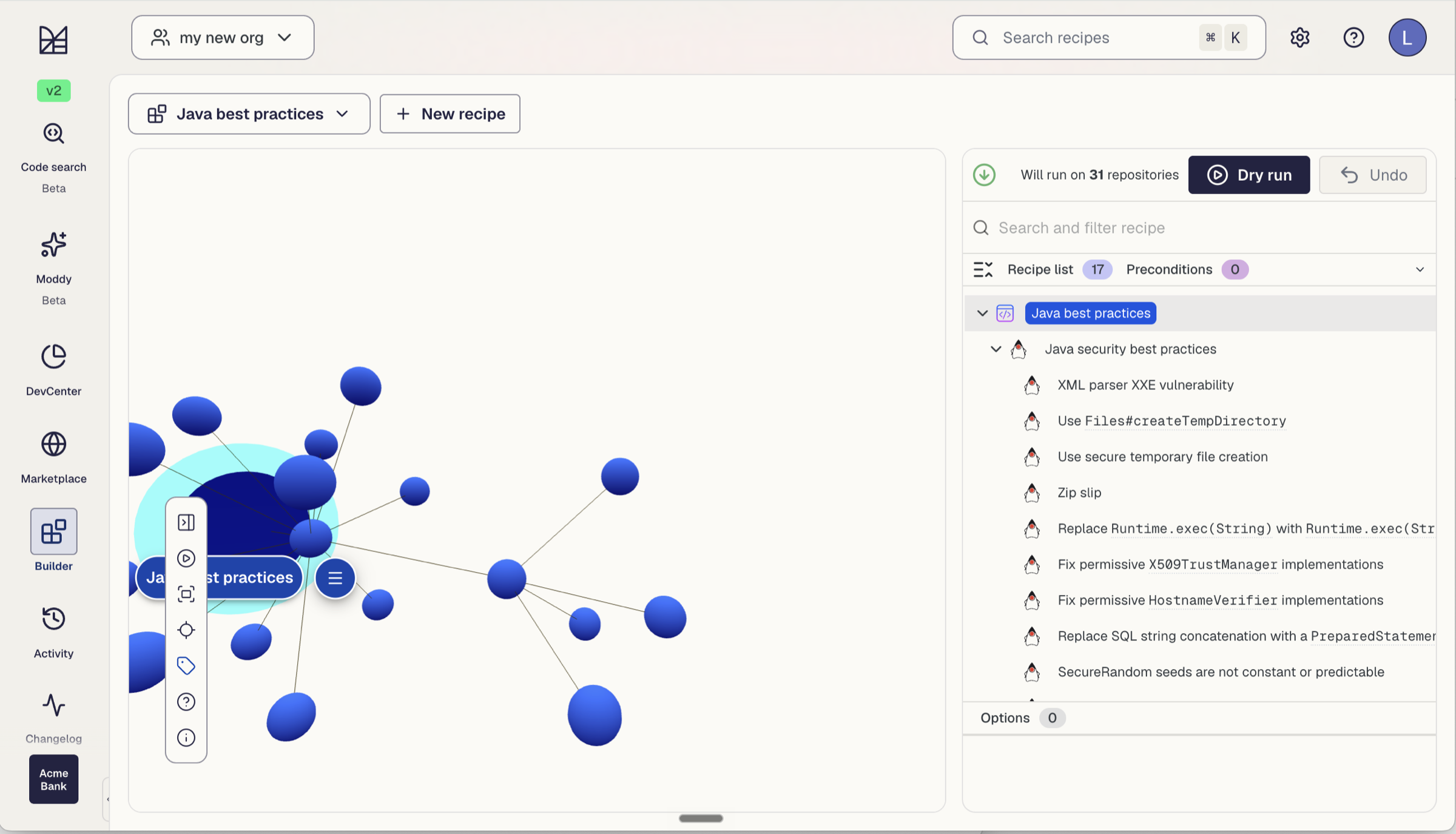
The most reliable approach to modernizing Java code is automated Java refactoring. By using semantic transformations instead of manual edits or regex, enterprises can modernize Java code safely while preserving formatting, style, and comments.
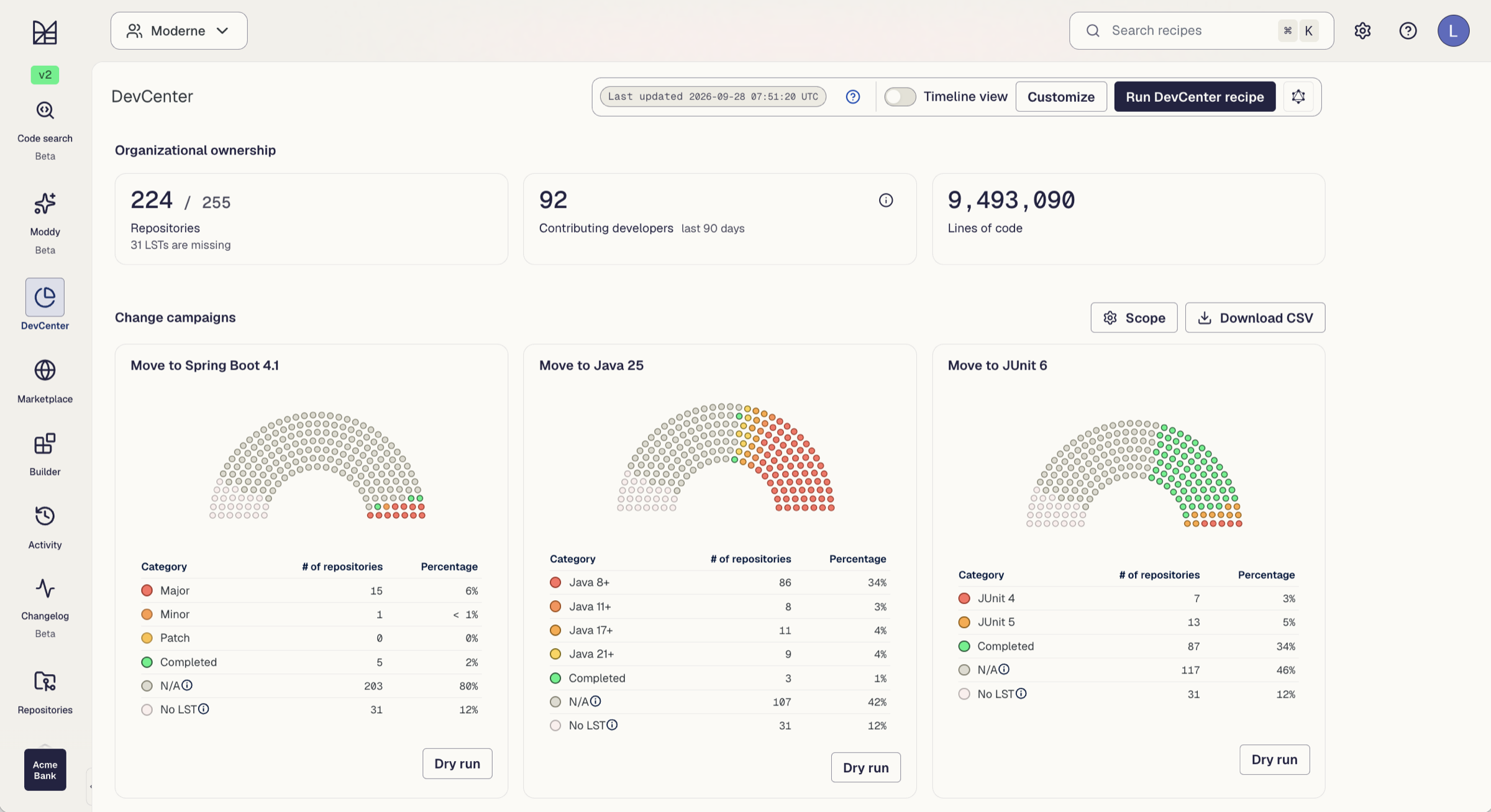
Leading organizations use platforms like Moderne to orchestrate migrations across their entire code estate. Instead of upgrading one application at a time, teams can modernize thousands of repositories in parallel with tested, repeatable recipes.
Yes. Moderne was built for multi-repo environments, applying upgrades simultaneously across all repositories to ensure consistency and eliminate code drift.
OpenRewrite provides the recipes that define how to modernize Java code. These recipes capture best practices for version upgrades, security patches, and framework migrations. Moderne scales those recipes across enterprise estates with orchestration, auditability, and collaboration.
Yes. Moderne ensures upgrades are deterministic, testable, and delivered as clean diffs in pull requests. Teams can review and validate changes with confidence before they reach production.
Modernize Java once. Then keep it that way.